
Saudi Work Visa vs Visit Visa: Differences, Rules and Best Choice
A Saudi Arabia work visa allows a foreign worker to work legally in the Kingdom. A Saudi visit visa allows someone to enter for tourism, family visits, business meetings, events, or Umrah. It does not allow paid employment. KSA Visa lists work visas for legal work, while Visit Saudi says the tourist eVisa is not a work visa.

What Is a Saudi Arabia Work Visa?
A Saudi Arabia work visa is for people who plan to work in the Kingdom. It connects the worker with an employer, job role, and legal work approval.
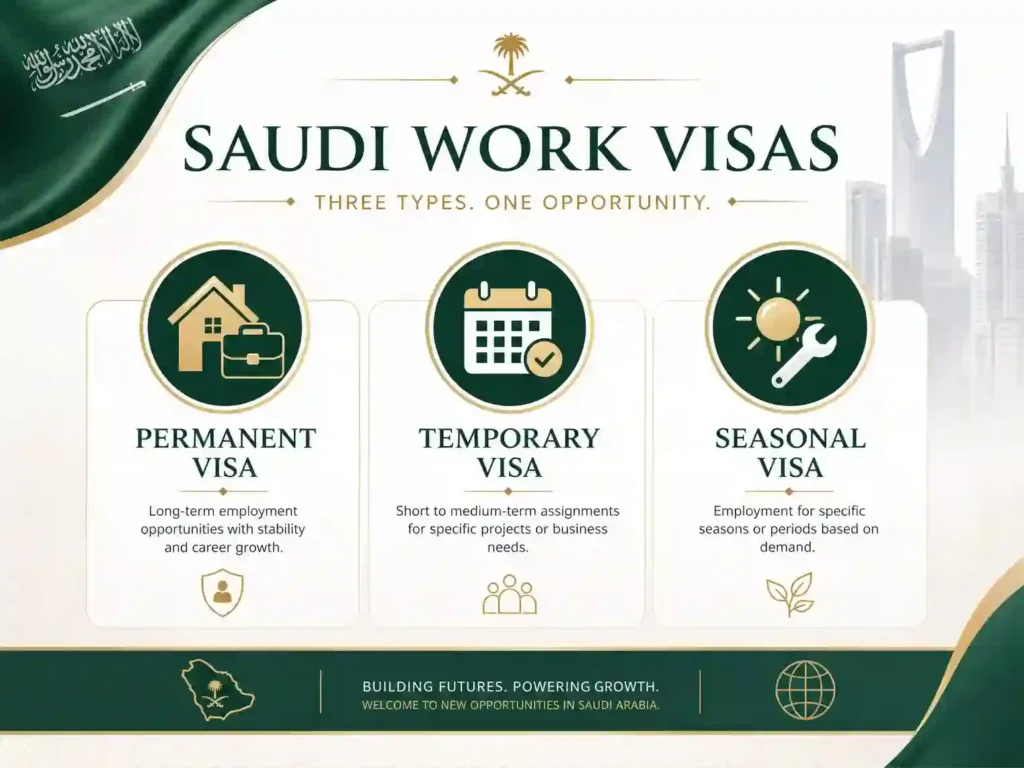
KSA Visa lists work visa options for people who need to work legally in Saudi Arabia. These include permanent work visa, temporary work visa, and seasonal work visa.
A permanent work visa suits long-term employment. A temporary work visa suits short-term work contracts. A seasonal work visa suits specific seasons or events.
Qiwa also supports work visa services for employers. It says businesses can issue permanent visas, temporary visas, and Hajj and Umrah temporary work visas through Qiwa.
What Is a Saudi Visit Visa?
A Saudi visit visa is for short-term entry. It can cover tourism, family visits, business visits, personal visits, events, and Umrah.

A visit visa does not give the same rights as a work visa. It mainly supports temporary entry for a clear visit purpose.
Visit Saudi says the tourist eVisa allows tourism activities, events, family and relative visits, leisure, and Umrah. It excludes Hajj and activities such as studying.
Visit Saudi also states that the eVisa is not a work visa. It says visitors must not take paid employment during their stay in Saudi Arabia.
Saudi Arabia Work Visa vs Visit Visa: Main Difference
The main difference is purpose. A work visa is for employment. A visit visa is for short stays without paid work.
| Point | Saudi Work Visa | Saudi Visit Visa |
|---|---|---|
| Main purpose | Legal work in Saudi Arabia | Short visit to Saudi Arabia |
| Paid employment | Allowed under the right work route | Not allowed |
| Sponsor | Usually a Saudi employer | Family host, business host, or self in some cases |
| Best for | Jobs, contracts, projects, seasonal work | Tourism, family, events, business meetings, Umrah |
| Platform | Qiwa, KSA Visa, MOFA route | KSA Visa, Visit Saudi, MOFA route |
| Long-term stay | Possible through proper work route | Not meant for long-term residence |
| Work rights | Yes, if approved | No paid employment |
| Family visit purpose | Not the main purpose | Yes, under family visit rules |
Can You Work on a Saudi Visit Visa?
No, you should not work on a Saudi visit visa. A visit visa does not replace a work visa.
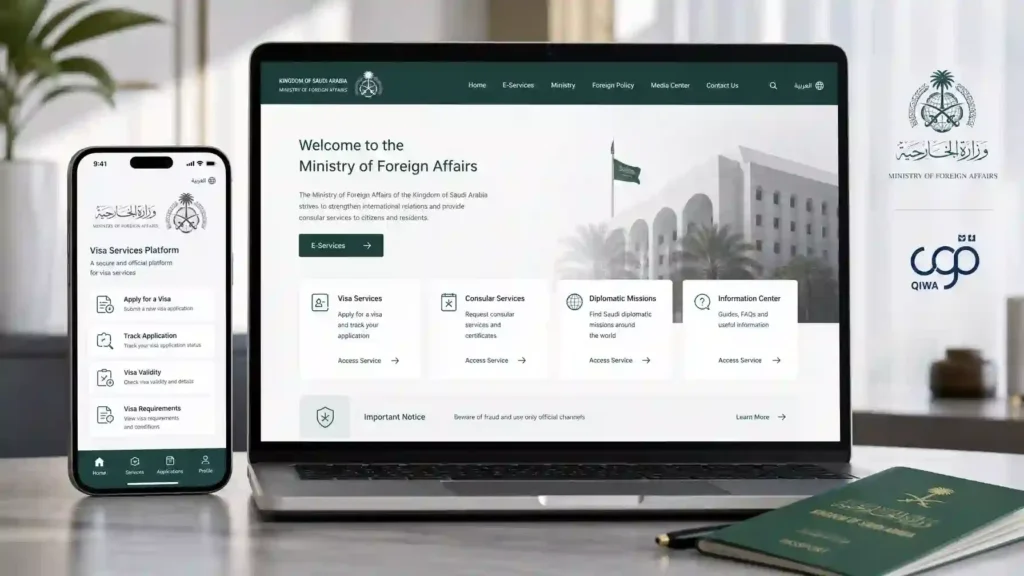
Visit Saudi’s eVisa terms clearly say the eVisa is for tourism or Umrah. It also says it is not considered a work visa. The terms say visitors must not take paid employment in Saudi Arabia.
This rule matters a lot. Many people confuse business visits with work. A business meeting does not equal local employment.
A visit visa may allow meetings, events, or family visits. It does not allow someone to take a job, join payroll, or work as an employee. If you are planning to travel from Pakistan to Saudi Arabia, check our complete guide on Saudi Visa for Pakistani citizens, including requirements, documents, fees, and application steps.
Can You Attend Business Meetings on a Visit Visa?
Yes, a business visit route can support business meetings. But it does not mean full-time employment.
MOFA says its Business Visa Request service allows a Saudi company or institution to request a visit for people in managerial positions with a business relationship.
This can help with meetings, business talks, and official visits. It should not replace a proper work visa for a job.
Use a business visit visa when the person comes for meetings. Use a work visa when the person will perform work inside Saudi Arabia.
Types of Saudi Arabia Work Visas
Saudi Arabia has different work visa routes. The correct route depends on the work type and contract length.
Permanent Work Visa
A permanent work visa suits long-term employment. KSA Visa says it applies to workers with long-term employment contracts in Saudi Arabia.
This route fits full-time workers. It can support a longer employment plan.
Temporary Work Visa
A temporary work visa suits short-term employment. KSA Visa says it allows workers with short-term contracts to work for a specified duration.
Seasonal Work Visa
A seasonal work visa fits specific seasonal needs. KSA Visa says it covers temporary positions linked to certain seasons or events.
This can apply to seasonal demand. The visa stays limited to the related period.
Hajj and Umrah Temporary Work Visa
Qiwa says employers can issue temporary work visas for Hajj and Umrah services. This route supports seasonal work during those periods.
Types of Saudi Visit Visas
Saudi visit visas can serve different short-term purposes. The right type depends on why the visitor wants to enter Saudi Arabia.
Tourist Visa
A Saudi tourist visa supports tourism, events, leisure, family visits, and Umrah. It does not allow paid employment.
The tourist eVisa can be useful for eligible travelers. Visit Saudi says the eVisa is valid for one year and allows multiple entries. It allows a stay of up to 90 days.
Family Visit Visa
A family visit visa helps residents or citizens invite close family members. MOFA says the Family Visit Request service lets residents send visit requests for first-degree relatives. It names parents, wife, and kids as examples.
MOFA also says the visitors should be first-degree relatives. The resident should have valid residency status for the request.
Business Visit Visa
A business visit visa supports business-related visits. MOFA says Saudi companies can request visits for people in managerial positions with a business relationship.
This route can suit meetings, discussions, and business contact. It does not replace a work visa.
Personal Visit Visa
A personal visit visa can support non-family and non-business visits. MOFA says the Personal Visa Request service aims to submit visit requests for people without a business or family relation to the requester.
Saudi Work Visa vs Tourist Visa
A Saudi work visa and tourist visa serve very different needs.
A work visa supports employment. A tourist visa supports leisure, events, family visits, and Umrah.
Visit Saudi says the tourist visa excludes activities such as studying. Its terms also say visitors cannot take paid employment during their visit.
Choose a work visa if a person will work. Choose a tourist visa if the person wants to visit, explore, or perform Umrah.
Saudi Work Visa vs Family Visit Visa
A work visa is for employment. A family visit visa is for visiting close relatives.
MOFA says the family visit service allows residents to request visits for first-degree relatives. It also says the request goes through the Visa services platform.
A family visit visa does not give work rights. It helps families meet for a temporary visit.
Use this route for parents, spouse, children, or eligible close family. Use a work visa for employment.
Saudi Work Visa vs Business Visit Visa
A business visit visa can support meetings and business relationships. A work visa supports actual work inside Saudi Arabia.

MOFA says the Business Visa Request service is for companies or institutions inside Saudi Arabia. It allows them to request visits for managerial people with business relationships.
This means a business visa may suit meetings, contract talks, and official visits. It should not cover day-to-day work for a Saudi employer.
If the person will work on-site, ask about the proper work visa route.
Saudi Work Visa vs Temporary Work Visa
This comparison can confuse readers. A temporary work visa is still a work visa.
The difference is duration and purpose. A permanent work visa supports long-term work. A temporary work visa supports short-term contracts.
KSA Visa lists both permanent and temporary work visas under work options. It says temporary work visas help workers with short-term employment contracts.
Saudi Visit Visa Validity and Stay Period
Visit visa validity depends on the visa type. The tourist eVisa has clear public terms.
Visit Saudi says the eVisa is valid for one year from issuance. It also says the eVisa allows multiple entries unless the visa says otherwise. The maximum stay under the eVisa is three months.
Visit Saudi also says the eVisa cannot be extended. If it expires before entry, the traveler must apply again and pay another fee.
Before travel, check your Saudi visa validity. This helps you avoid entry, exit, or overstay issues.
Saudi Work Visa Validity
Work visa validity depends on the visa type, contract, employer approval, and official platform decision.
KSA Visa lists permanent, temporary, and seasonal work visa routes. Each route has a different purpose.
Qiwa says employers can issue permanent and temporary work visas through its platform. That means the employer plays a key role in the work visa process.
Do not rely on old screenshots or agent claims. Always check the latest status through Qiwa, KSA Visa, MOFA, or your employer.
Documents Usually Needed for a Saudi Work Visa
The exact documents can change by job, nationality, embassy, and employer. Still, most work visa cases need strong employment proof.
Common items may include:
- Valid passport
- Job offer or employment contract
- Employer visa authorization
- Professional documents
- Medical test records
- Education or experience documents
- Police or background documents, where required
- Visa application through the correct platform
Documents Usually Needed for a Saudi Visit Visa
Visit visa documents depend on the visit type.
For a tourist eVisa, Visit Saudi says applicants need a valid passport from an eligible country. The passport must have at least six months left from the date of entry.
For a family visit request, MOFA says applicants should complete the online form through the Visa services platform. It also mentions electronic stamping and authentication from the Chamber of Commerce or employer.
For a business visit request, MOFA says the company completes the online form and stamps it from the Chamber of Commerce.
How to Apply for a Saudi Work Visa
The employer usually starts the work visa process. The worker does not control every step alone.
A simple process can look like this:
- The Saudi employer confirms the job need.
- The employer checks visa eligibility through Qiwa.
- The employer selects the correct work visa type.
- The employer submits the work visa request.
- The worker completes embassy or platform steps.
- The worker completes medical and document checks.
- The worker travels after visa approval.
How to Apply for a Saudi Visit Visa
The visit visa process depends on the visit purpose.
For tourist travel, eligible visitors can apply through the official eVisa portal. Visit Saudi calls it the official website for the tourist visa to Saudi Arabia.
For family visits, the Saudi resident or citizen usually starts the request. MOFA says residents can apply for first-degree relatives through the Visa services platform.
For business visits, the Saudi company starts the request. MOFA says the company requests a visit for managerial persons with a business relationship.
How to Check Saudi Visa Application Status
You can check many Saudi visa applications through the MOFA query service. MOFA says the service lets citizens, residents, businesses, visitors, and government users query applications submitted to the Ministry of Foreign Affairs.
MOFA says users should enter the Visa services platform and follow the query path. This helps track requests submitted to MOFA.
Which Visa Should You Choose?
Choose the visa based on your real purpose. Do not choose based on speed alone.
| Your Purpose | Best Visa Route |
|---|---|
| Full-time job in Saudi Arabia | Work visa |
| Short-term contract work | Temporary work visa |
| Seasonal work | Seasonal work visa |
| Hajj or Umrah service work | Hajj and Umrah temporary work visa |
| Tourism or leisure | Tourist visa |
| Visiting parents, spouse, or children | Family visit visa |
| Business meetings | Business visit visa |
| Non-family personal visit | Personal visit visa |
| Umrah without work | Tourist/eVisa route, where eligible |
The safest rule is simple. If you will earn money or work for a Saudi entity, ask for a work visa.
Common Mistakes to Avoid
Many applicants make the same visa mistakes. These mistakes can delay entry or create legal trouble.
Do not use a tourist visa for paid work. Visit Saudi clearly says the eVisa is not a work visa.
Do not confuse business meetings with employment. A business visit can support meetings. It does not make you an employee.
Do not trust random agents without checking official portals. Use KSA Visa, MOFA, Qiwa, and Visit Saudi.
Do not ignore passport validity. Visit Saudi says the eVisa application needs a passport with at least six months left from entry.
Do not apply under the wrong purpose. The visa purpose should match your real activity.
Saudi Arabia Work Visa vs Visit Visa for Employers
Employers should choose the right visa before inviting workers or guests.
Use a work visa for employees, technical workers, and people who will perform paid work. Qiwa supports permanent and temporary work visa issuance for employers.
Use a business visit route for meetings, negotiations, and business relationships. MOFA says the business visit request applies to managerial visitors with business relationships.
Use a family visit route only for family purposes. MOFA says family visitors should be first-degree relatives.
Employer Responsibilities in Saudi Arabia
Employers in Saudi Arabia bear significant responsibilities to ensure a compliant and fair working environment. These obligations are primarily governed by the Ministry of Human Resources and Social Development (MHRSD) and its associated platforms.
1. Nitaqat Compliance (Saudization)
Nitaqat is Saudi Arabia’s nationalization program, designed to increase the employment of Saudi nationals in the private sector. It classifies private companies into color-coded categories (Platinum, Green, Yellow, Red) based on their Saudization percentage, which is the ratio of Saudi employees to total employees .
Key Aspects of Nitaqat:
Color Bands and Benefits:
- Platinum: Exceeds Saudization targets, offering benefits like instant visa approvals without quota restrictions, priority in government tenders, and unlimited work permit renewals for expatriates .
- Green: Meets requirements, allowing normal visa processing and standard government services .
- Yellow: Below required Saudization, leading to restrictions on new work visas, expat contract renewals, and a six-month window to improve status .
- Red: Significantly below requirements, resulting in severe operational restrictions, including a complete block on new work visa issuance and expat contract renewals, and potential fines .
- Calculation: The Saudization percentage is calculated as (Number of Saudi Employees / Total Employees) × 100. This calculation considers factors such as entity size (Small, Medium, Large, Giant) and industry-specific targets . Saudi employees must be registered with the General Organization for Social Insurance (GOSI) and earn at least the minimum wage .
- Impact on Visa Quotas: A company’s Nitaqat status directly influences its ability to obtain and manage visa quotas. Higher Nitaqat ratings (Platinum and Green) grant greater flexibility and access to recruitment services on platforms like Qiwa .
2. Managing Visa Quotas
Employers must manage their visa quotas through the Qiwa platform. These quotas determine the number of foreign workers a company is permitted to hire. The MHRSD has introduced updated regulations to structure these limits more clearly .
Key Regulations for Instant Work Visas (2026):
- Newly Established Businesses (less than two years old): Up to five instant visas .
- Businesses Older than Two Years: Up to 50 instant visas, either in a single application or multiple applications within the same week .
- Establishment Program Participants: Start with two visas, with additional visas possible upon improving Saudization rates .
3. Adhering to the Wage Protection System (WPS)
The Wage Protection System (WPS) is a mandatory electronic salary transfer system implemented by the MHRSD to ensure that private sector employees receive their wages on time and in full, according to their employment contracts .
Employer Obligations under WPS:
- Electronic Transfer: Employers must transfer employee salaries through approved banks, creating a digital record of payments .
- Monthly File Submission: A standardized and encrypted WPS file containing detailed wage information (net wage, account number, employee name, basic salary, allowances, deductions, etc.) must be submitted monthly to the MHRSD .
- Penalties for Non-Compliance: Delays in submitting WPS files or discrepancies in payment can lead to penalties, including fines and suspension of government services. If delays exceed three months, employees may be allowed to transfer to another employer without the current employer’s approval .
4. Legal Obligations for Sponsoring Employees
Sponsoring foreign employees in Saudi Arabia entails several legal obligations, covering various aspects of their employment and welfare.
- Employment Contracts: Since February 2025, electronic contract documentation through the Qiwa platform is mandatory for all employees. Paper contracts are no longer accepted . Employers must create, renew, amend, and terminate contracts digitally, requiring mandatory electronic approval from the employee .
- Health Insurance: Employers are legally required to provide health insurance for their expatriate workers, ensuring access to medical treatment .
- End-of-Service Benefits (ESB): Upon termination of employment, employers must settle all outstanding wages and end-of-service benefits as stipulated by Saudi Labor Law .
- Exit and Re-Entry Visas: Employers are responsible for processing exit and re-entry visas for their foreign employees, allowing them to leave and return to the Kingdom .
- Employee Transfers: The Qiwa platform facilitates employee transfers (sponsorship transfers), but specific conditions apply, such as a minimum of 12 months of residency with the current employer (in standard cases) and explicit employee consent .
Common Visa Rejection Reasons
Despite efforts to streamline the visa application process, rejections can occur for various reasons. Understanding these common pitfalls can help applicants avoid delays and ensure a smoother process.
1. Incomplete or Incorrect Documentation
This is one of the most frequent causes of visa rejection. Even minor errors can lead to denial .
- Missing Documents: Failure to provide all required documents, such as invitation letters, proof of relationship, or clear passport copies .
- Incorrect Information: Discrepancies in personal data (e.g., name not matching passport, wrong passport number, incorrect date of birth) .
- Untranslated Documents: Documents not translated into Arabic or English as required .
- Unverified/Unattested Documents: Certificates (e.g., marriage, birth) that are not officially attested can lead to rejection .
2. Incorrect Visa Type Application
Applying for a visa category that does not match the applicant’s true purpose of visit can raise red flags and result in rejection . For example, applying for a tourist visa for business activities or a personal visit visa instead of a family visit visa .
3. Previous Overstay or Immigration Violations
Applicants who have previously violated Saudi immigration rules, such as overstaying a previous visa or working without proper authorization, are likely to face rejection . Outstanding fines related to overstaying can also lead to denial .
4. Security Concerns
Applications may be rejected if the applicant is deemed to pose a security risk to the Kingdom . This can be a broad category and may not always be explicitly communicated.
5. Profession Not Eligible (for Family Visits)
For certain visa types, particularly family visit visas, specific professional eligibility criteria may apply. If the applicant’s profession is not approved for the requested visa type, the application may be rejected .
6. Issues with Sponsor or Employer
For work and sponsored visit visas, problems related to the sponsor or employer can lead to rejection. This includes incomplete sponsor data or issues with the employer’s compliance status .
7. Non-Compliant Photographs
Submitting a digital photograph that does not meet Saudi specifications (e.g., incorrect size, background, face coverage, or quality) is a common reason for application delays and rejection
Saudi Arabia Work Visa vs Visit Visa for Job Seekers
A visit visa may help someone explore Saudi Arabia. It does not allow paid employment.
If you receive a job offer, ask the employer about the proper work visa route. Do not start work on a tourist or family visit visa.
A real job needs the correct legal path. KSA Visa lists work visa routes for legal work in Saudi Arabia.
Job seekers should keep documents ready. This includes passport, education records, experience letters, and medical documents where required.
Saudi Arabia Work Visa vs Visit Visa for Families
Families often search this topic before travel. The key difference stays simple.
A family visit visa lets relatives visit Saudi Arabia. MOFA says the service covers first-degree relatives such as parents, wife, and kids.
A work visa belongs to the worker. It does not replace a family visit visa.
If a family member wants to work, they need their own legal work route. A family visit visa does not allow paid employment.
Key Takeaway
Saudi Arabia work visa vs visit visa is mainly about purpose. Work visas allow legal work. Visit visas support short-term entry for tourism, family, business, or personal visits.
Do not use a visit visa for paid employment. Visit Saudi says the tourist eVisa is not a work visa and does not allow paid work.
Use official portals before applying. Check KSA Visa, Qiwa, MOFA, Visit Saudi, or your employer for the latest rules.
FAQs About Saudi Arabia Work Visa vs Visit Visa
What is the main difference between Saudi work visa and visit visa?
A Saudi work visa allows legal work under the correct route. A Saudi visit visa allows short-term entry for tourism, family, business, events, or Umrah. Visit Saudi says the eVisa is not a work visa and does not allow paid employment.
Can I work in Saudi Arabia on a visit visa?
No. You should not work on a Saudi visit visa. Visit Saudi says the eVisa is for tourism or Umrah. It also says visitors must not take paid employment in Saudi Arabia.
Is a Saudi business visit visa the same as a work visa?
No. A business visit visa supports business visits and meetings. A work visa supports legal employment. MOFA says the business visit service helps companies request visits for managerial people with a business relationship.
What is a Saudi family visit visa?
A Saudi family visit visa lets eligible relatives visit Saudi Arabia. MOFA says residents can send visit requests for first-degree relatives. It lists parents, wife, and kids as examples.
How long is the Saudi tourist eVisa valid?
Visit Saudi says the eVisa is valid for one year from the date of issuance. It also allows multiple entries unless stated otherwise. The maximum stay under the eVisa is three months.
Can a Saudi tourist visa be extended?
Visit Saudi says the eVisa cannot be extended. If it expires before entry, the traveler must apply again and pay another application fee.
Who applies for a Saudi work visa?
The Saudi employer usually starts the work visa process. Qiwa says employers can issue permanent and temporary work visas through its Instant Work Visas service.
How can I check my Saudi visa application?
You can use MOFA’s query service for applications submitted to the Ministry of Foreign Affairs. MOFA says this service is available for citizens, residents, businesses, visitors, and government users.