
Check Online Iqama Huroob Status in Saudi Arabia (2026 Guide)
If you’re an expatriate worker or employer in Saudi Arabia, few words carry as much weight as Huroob (هروب) — “absconding.” A Huroob report can freeze your Iqama, block your travel, and put your right to work in the Kingdom at serious risk. This guide explains exactly how to check your Iqama Huroob status online in 2026, what has changed under recent Ministry of Human Resources and Social Development (MHRSD) reforms, and what to do if you’ve been flagged.
Iqama Huroob Checker
Instant Status Verification Tool (2026)
To ensure 100% data accuracy and privacy, you must complete the official security CAPTCHA on the Ministry portal.
✅ On Duty: Your status is clear.
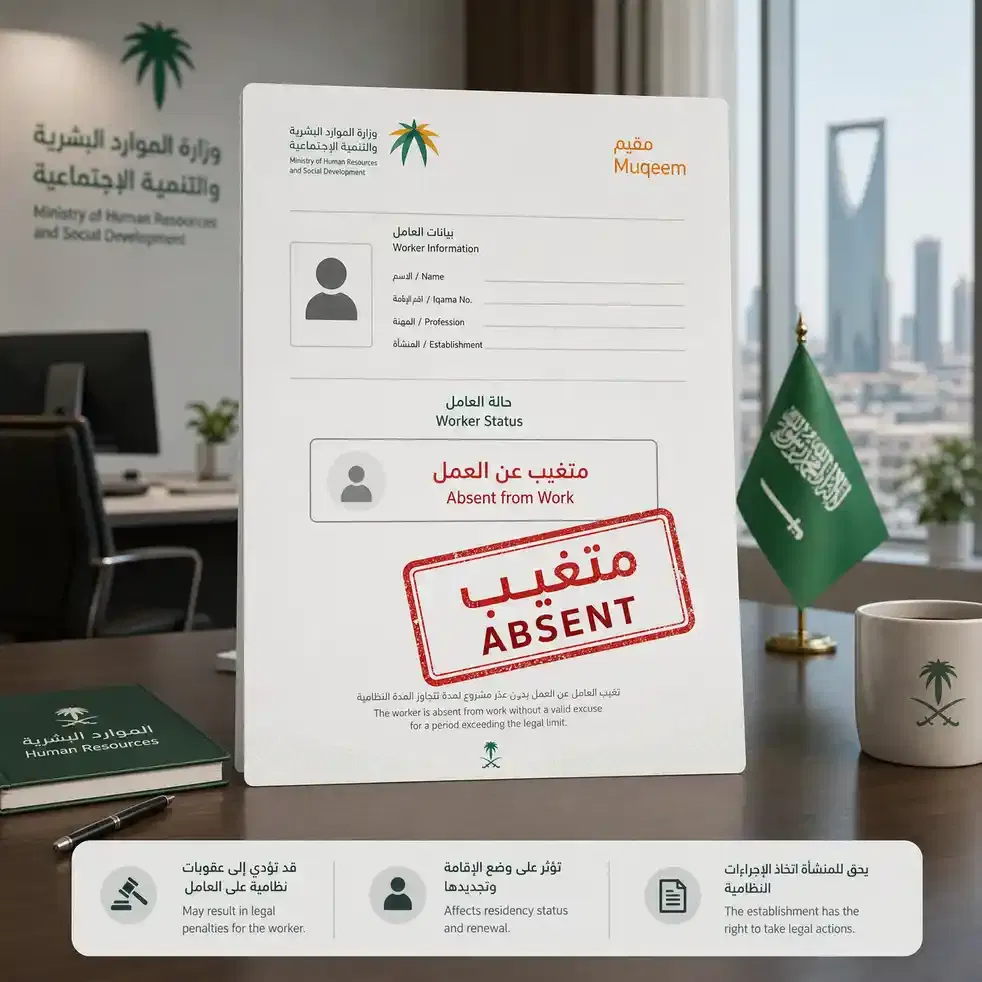
❌ Absent from Work: Huroob report is active.
Security encrypted link to Muqeem/MHRSD
What Does Huroob Mean in Saudi Arabia?
Huroob (هروب), literally “escape” in Arabic, is the status applied when a sponsor (employer) formally reports that a foreign worker has left their job, stopped reporting for duty, or otherwise broken the terms of their work contract without permission. It operates under Saudi Arabia’s sponsorship (Kafala) framework, where every non-Saudi worker’s legal residency is tied to a registered employer.

Two scenarios typically trigger a Huroob report:
- Employer-filed report — the sponsor reports the worker as absent from work for a prolonged, unexplained period.
- Immigration-triggered report — the Ministry of Interior flags a worker who fails to return to Saudi Arabia after exiting on an exit/re-entry visa within the permitted timeframe.
Why You Should Check Your Huroob Status Regularly
A Huroob report is not always something the worker is aware of. Reports can be filed:
- During an unresolved workplace dispute
- After a worker fails to return from vacation or an exit/re-entry visa
- Mistakenly, due to employer error or miscommunication
- Retaliatory, in cases where a worker has raised a labor complaint
Because the consequences are severe and can apply without direct notice, checking your status periodically — especially before renewing your Iqama, applying for a transfer, or planning travel — is essential. You can also learn how to perform a Huroob Status Check Using Iqama Number to verify your current employment status in Saudi Arabia.
The 60-Day Grace Period: What Changed
One of the most significant — and most under-reported — reforms to the Huroob system is the introduction of a 60-day grace period after a report is filed. This reform, phased in from late 2024 and firmly in effect through 2026, means a worker is not instantly rendered illegal the moment an employer files an absence report.

During this 60-day window, a worker can:
- Transfer sponsorship to a new employer via Qiwa, without needing the current employer’s consent in certain qualifying cases
- Request a Final Exit visa to leave Saudi Arabia legally and avoid further penalty
- Return to the current employer if the dispute is resolved amicably
- File a labor complaint with MHRSD if the report is believed to be false or retaliatory
Consequences of a Confirmed Huroob Status
If the 60-day window passes without resolution, or the report is upheld, the consequences are severe:
- Iqama invalidated — legal residency is cancelled
- Re-entry ban of approximately 3 to 5 years, in some cases longer for repeat or severe cases
- Loss of end-of-service benefits and other employment entitlements
- Arrest and deportation risk during routine checks
- Blocked from renewals, transfers, and most online government services
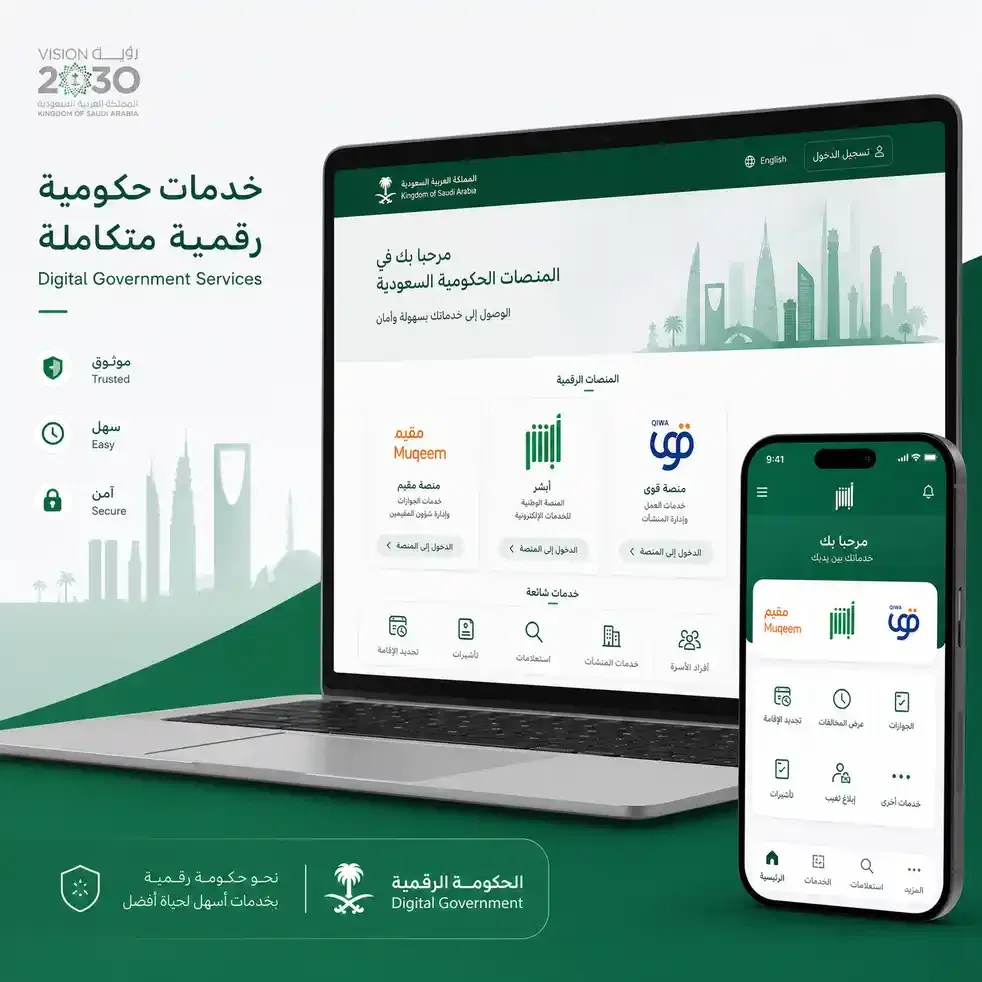
1. Check Huroob Status via Muqeem
Muqeem (muqeem.sa) is the Ministry of Interior’s dedicated portal for expatriate and employer residency services, and is one of the most direct ways to confirm employment status tied to your Iqama.
- Go to the official Muqeem website: muqeem.sa.
- On the homepage, locate the inquiry section for residency/employment status.
- Enter your Iqama number (or border number, if you don’t yet have an Iqama) and the displayed verification code.
- Submit the form to view your current status.
- Look for the status field — it will display either “On Duty” (no report) or “Absent from Work” (active Huroob report).
2. Check Huroob Status via Absher
Absher (absher.sa) is the Ministry of Interior’s flagship citizen and resident services platform and remains a reliable way to check status, particularly for individuals who already hold an Absher account.
- Log in to your Absher Individuals account at absher.sa.
- Enter your username/ID number and password, then complete the SMS verification step.
- From the dashboard, go to “My Services” or “Inquiries.”
- Select “Employee Services” or “Iqama Status” and enter your Iqama number.
- Your current work status will be displayed on screen.
Employers with a sponsor account can similarly check the status of workers listed under their sponsorship from the Absher dashboard.
3. Check Huroob Status via Qiwa
Qiwa (qiwa.sa), the Ministry of Human Resources and Social Development’s labor market platform, has become central to how Huroob reports are filed, tracked, and resolved under the 2026 reforms.
- Log in to qiwa.sa using your Absher credentials.
- Navigate to the contract or labor status section relevant to your Iqama.
- Review your current employment status and any active absence reports.
- If eligible, this is also where sponsorship transfer and Final Exit visa requests are initiated during the grace period
How to Remove or Cancel a Huroob Report
1. Employer Withdrawal
If the report was filed in error or the dispute is resolved, the employer can withdraw it directly through Absher or Qiwa. This is typically the fastest resolution path, though it depends entirely on employer cooperation and may involve an administrative fee.
2. Labor Complaint for Malicious or False Reports
If you believe the report was filed falsely — for example, in retaliation for raising a wage or workplace complaint — you can file a formal complaint with MHRSD. Employers found to have filed false reports face fines of up to SAR 20,000. Keep documentation such as message records, attendance evidence, and bank statements to support your case; labor courts can review this evidence and overturn a Huroob status.
3. Sponsorship Transfer
If you qualify under the Red Nitaqat, unregistered contract, or unpaid wages provisions above, you can request a transfer via Qiwa during the grace period without needing your current employer’s sign-off.
4. Final Exit Visa
If resolution isn’t possible or desired, requesting a Final Exit visa during the 60-day window allows you to leave Saudi Arabia legally, avoiding the harsher penalties tied to an unresolved Huroob status.
Huroob Status Check for Family Members and Dependents
Huroob status does not apply to every Iqama holder in the same way. It is mainly associated with foreign workers who have an employment relationship with a Saudi employer or sponsor.
Employees
For private-sector expatriate employees, work-related absence procedures are generally connected to the employer and the worker’s employment record. If you suspect a Huroob or absence-from-work status, check the worker’s status through the relevant official Saudi platforms and take action promptly.
Domestic Workers
Domestic workers, such as house drivers, maids, caregivers, and other household employees, follow a separate system through Musaned. Their work-stoppage and absence procedures can differ from those applicable to private-sector employees.
Family Members and Dependents
Dependents sponsored under a family member’s Iqama generally do not have a Huroob status simply because they are dependents. Huroob is linked to an employment relationship and an applicable absence report.
However, a dependent may have other residency or immigration issues, such as an expired Iqama or an issue with their sponsorship. These are different from a worker’s Huroob status and should be checked through the appropriate official service.
Important Difference
If you are checking an Iqama belonging to an employee, focus on work status and absence-related records. If the Iqama belongs to a family dependent, check the person’s residency and sponsorship status instead of assuming that an employment-related Huroob status applies.
FAQs Check Online Iqama huroob
What does “Absent from Work” mean on Absher or Muqeem?
It means an active Huroob (absconding) report exists against your Iqama. “On Duty” means no report is currently active.
Can I check my Huroob status without an Absher account?
Yes — Muqeem allows inquiries using just your Iqama or border number, without requiring a full account login, making it the fastest public-facing check method.
Is the MOL website (mol.gov.sa) still usable for checking Huroob status?
No. As of December 1, 2025, the MOL expatriate inquiry service became redundant. Use Muqeem, Absher, or Qiwa instead.
How long do I have to fix my status after being reported?
Under the current reform, you generally have a 60-day grace period from the date the report is filed to transfer sponsorship, request a Final Exit visa, or resolve the dispute.
Can my employer cancel a Huroob report they filed by mistake?
Yes. Employers can withdraw a report they filed in error directly through Absher or Qiwa, though this depends on their cooperation and may involve a fee.
What happens if I don’t resolve my Huroob status within the grace period?
Your Iqama is invalidated, you may face a re-entry ban of roughly 3 to 5 years, lose end-of-service benefits, and be at risk of arrest and deportation.
Are domestic workers checked the same way as other expatriate workers?
No. Domestic workers are managed under a separate system via Musaned, not Qiwa, and have had access to distinct relief measures such as the May 2025 amnesty program.
Can I transfer to a new employer while under Huroob status?
Generally, transfers aren’t possible once a Huroob status is fully finalized. However, during the 60-day grace period, and if you qualify under Red Nitaqat, unregistered-contract, or unpaid-wage provisions, a transfer may be initiated via Qiwa before the status is finalized.
Does a false or malicious Huroob report carry any penalty for the employer?
Yes. Employers found to have filed false or malicious reports can face fines of up to SAR 20,000 under current labor law reforms.